
Recovery from Injury
Raise your hand if you have had a major leg injury that has prohibited you from participating in the activities you love to do? Raise your hand if that injury resulted in a long, long recovery?
Can anyone see me raising my hand and wildly waving it all around in agreement to these questions?
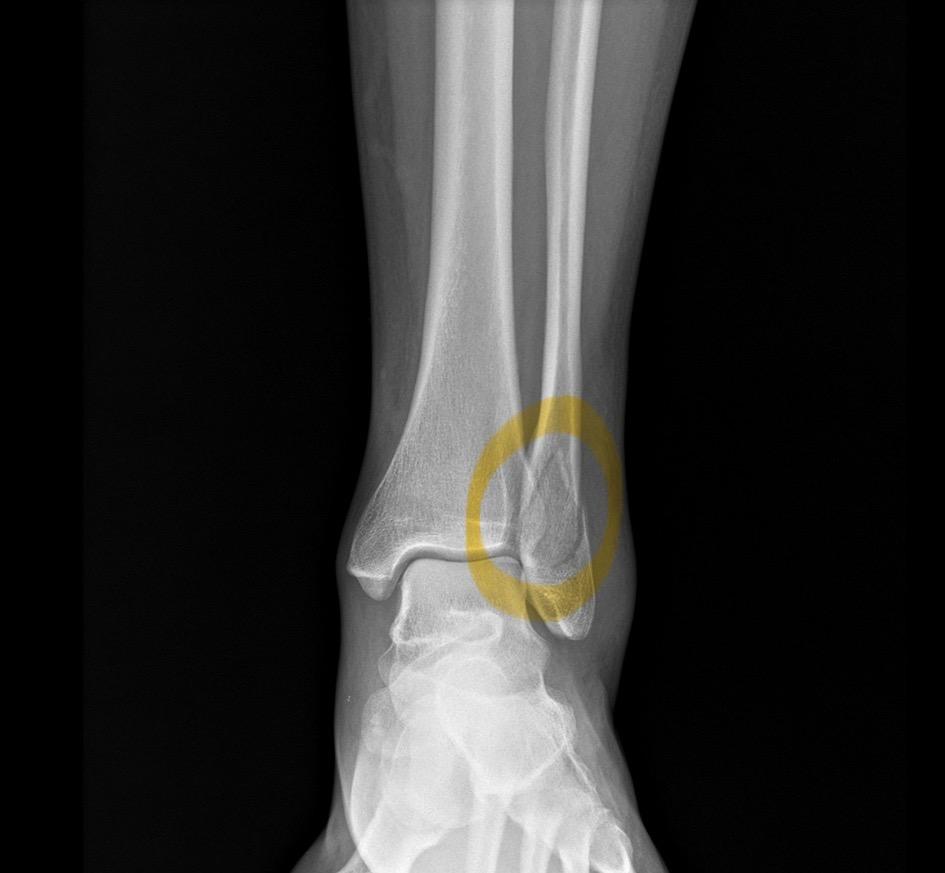
In June, I unfortunately broke my distal fibula while surfing in Costa Rica. This is the large bone on the outside of your ankle. The subsequent healing and protective process jailed me in a boot and knee scooter, with eventual progress to crutches, then to a restrictive brace, and ultimately now to minimal to no use of the brace though with some restrictions still in place.
After months of these restrictions, I am happy to have a healing bone. However, the sedentary nature of the healing process has left me with a stick leg that is weak, lacking motion, and moving in all sorts of sloppy ways.
As a Physical Therapist, I am finding something daily that needs to be worked on in order to not only complete daily tasks normally, but to allow me to return to the trails and canyons. I have been thinking a lot lately on how all-consuming this is, and this is with being fortunate enough to have a degree and decades of experience in the orthopedic realm.
I wanted to break down and simplify some of what you might expect to need to work on when you are returning from injury and want to get back on the trail. Please be sure to consult with your physician and your physical therapist about exercises that are specific to your injury and fit within any precautions or restrictions you may have. Use some of this information as talking points with your PT about what they can do to help you return to recreation normalcy.
Range of Motion
If there have been restrictions because of your injury, you likely have reduced motion.
For some injuries like a fracture, by limiting motion then healing can occur. The downside is that you end up healing within that limited range of motion.
You will need to make sure you have motion at the obvious areas of injury, but also at joints around it. For me, the whole leg was not moving much, so now I have to get motion back at my great toe, ankle, knee, and hip. When you are sitting a lot or stuck lying down and elevating, not much is moving and things get tight! Flexibility will need to be restored, so brace yourself for some time spent stretching.
Proprioception and Ankle Strategy
Your ankles are doing a lot more work on the trail than you probably realize. Ankle strategy is your body’s first line of defense when the ground shifts underneath you—rocks, roots, loose dirt, or that one awkward step you didn’t see coming. Tiny muscles and movements around your ankle make constant adjustments to keep you upright and your foot planted. Proprioception is your body’s built-in awareness system, it tells your brain where your foot and ankle are in space without you having to look down at them. Together, they help you react quickly when the trail gets uneven. The good news? You can train both. Walking on uneven terrain, doing single-leg balance exercises, and practicing controlled movements can help your ankles get better at those quick little corrections that can make the difference between a simple wobble and a twisted ankle.
Strength
Isn’t it annoying how long it takes to build up strength, and how quickly you lose it? Before you are setting out for a hike or a more advanced activity, carefully think about your level of strength. Can you go up and down stairs normally? Can you squat down and back up? Can you raise up on your toes? These are all seemingly simple tasks, but are quite good indicators of resuming normal, basic function. If you can’t do these, you should be prioritizing them prior to setting out to do more demanding tasks.
Normal and Confident Movement
When you have had a prolonged recovery or extended time with restrictions, you learn to move differently to get through your day. Before you hit the trails or other more vigorous activity, you should make sure that you can move normally and confidently.
There are two pieces of this to address.
First, you need to not be afraid to move. We in the biz call it ‘fear avoidance’. It is just what it sounds like, you avoid doing certain things, moving into full motion, or similar, because of risk of pain or re-injury. By doing so, you may end up with poor quality motion or moving in a way you wouldn’t normally. This could lead to a different injury or future aches and pains due to overuse from muscles or stresses to joints that wouldn’t normally have it.
Second, after immobility and learned compensations, there are certain movements or positions that your body may unconsciously avoid because there is a recognition of danger, it just plain doesn’t know what to do, or there is a sense of uncertainty if you can do what you need to. As I am beginning to try new things, the automatic nature at which I used to move is not there. I pause a second or have to think about what I am about to do because it has been months since I have done it.
In Conclusion
As rewarding and fulfilling it is to get back to the trails and the canyons, please take the time to properly rehabilitate your injury before doing so. Think long and hard about what demands you may have when you set out at the trailhead. Might there be a scramble? Loose ground? Lots of balance or uneven terrain? Downclimbing? Can you do the things you need to in order to have a fun and successful day?
Ultimately, you don’t want to put yourself at risk for further injury, or be a liability to your group by hurting yourself while out in the midst of the great outdoors. Your PT will help guide you to success and you will have having a grand time outside before you know it!